

What Are Mortgage Rates and Why Do They Matter?
Mortgage rates represent the interest percentages charged by lenders on home loans. These rates impact how much buyers will pay each month and the total loan cost over time, making it important for homeowners who want to sell instantly to understand their effect. Mortgage rates can make the difference between a home that fits comfortably within your budget and one that is financially out of reach. Lenders set rates based on the borrower’s credit profile, the loan type, and prevailing economic conditions. Typically, buyers can choose between fixed-rate mortgages, where the rate and payments stay the same, and adjustable-rate mortgages, where rates can change after an initial period.
Factors That Affect Mortgage Rates
Mortgage rates do not exist in a vacuum; the Federal Reserve’s monetary policies influence borrowing costs nationwide. When the Fed adjusts its benchmark rate, mortgage rates often move in tandem. Economic indicators like unemployment, inflation, and GDP growth also play a significant role. For instance, high inflation often pushes rates higher, while rising unemployment can lead to lower rates to stimulate borrowing. Global events, such as geopolitical conflicts, pandemics, or significant market disruptions, can also demand sudden rate adjustments. These shifts reflect lenders’ need to manage risk in uncertain times.
The Ripple Effect: How Rising and Falling Rates Shape Home Affordability
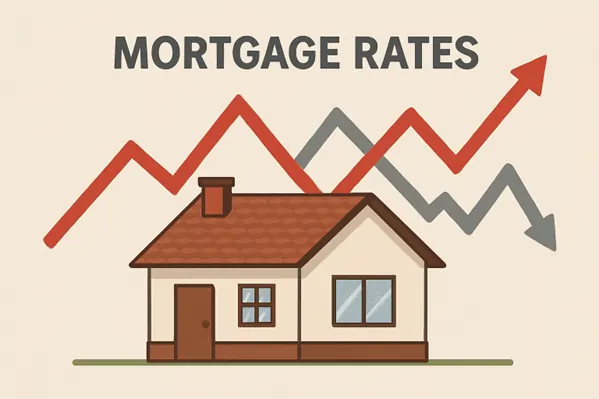
Rate fluctuations have a direct, measurable influence on buyers’ wallets. An increase in mortgage rates raises monthly payments and significantly boosts the total cost of the home over a 30-year loan. Conversely, falling rates improve affordability by lowering both monthly obligations and the total paid in interest. This can also affect buyers seeking a cash out refinance, as lower rates may allow them to access home equity more easily. As a result, demand for homes tends to rise when rates fall since buyers can get more for their money.
Consider two buyers: one secures a $350,000 mortgage at 4%, and the other gets the same loan at 6%. The difference in monthly payments can add up to hundreds of dollars per month, and tens of thousands over the life of the loan. Small rate changes sway buyer demand, influencing market activity nationwide.
Buyer Behavior in Response to Mortgage Rate Movement
Buyers often feel a sense of urgency when mortgage rates start climbing. This urgency can speed up decision-making, causing more buyers to enter the market quickly before rates increase. However, sustained rate increases typically cool the market, slowing home sales and sometimes causing prices to stabilize or drop.
When rates fall, demand tends to surge. More buyers can qualify for loans, increasing competition for available homes. Bidding wars become more common, and sellers often receive multiple offers. As recent market analyses show, these surges can challenge even seasoned buyers to stay competitive while sticking to their budget.
Strategies for Buyers Navigating Rate Fluctuations
- Locking in a rate: If you find a favorable rate, consider locking it to protect yourself from potential increases before your closing date.
- Comparing loan products: Explore different loan types (conventional, FHA, VA, etc.) and lenders, as rates and terms may vary.
- Adjusting your budget expectations: Understand how changing rates impact what you can afford and be ready to adjust your price range if necessary.
- Seeking expert financial guidance: Consult mortgage brokers or financial advisors for tailored advice based on your goals and the current market landscape.
Short- and Long-Term Market Impacts of Mortgage Rate Changes
Short-term rate increases can quickly cool housing markets, leading to more inventory and less upward pressure on prices. Conversely, falling rates may worsen inventory shortages due to surging demand, which can increase prices. Over the long term, persistent high rates can slow both home purchasing and new home construction, often leading to broader economic slowdowns.
Lower rates, while improving affordability for buyers, can sometimes fuel rapid home price appreciation, making it tougher for new buyers to enter the market. The balance between supply, demand, and mortgage rates continually shapes the housing landscape—and, by extension, the wider economy.
Final Thoughts
Understanding mortgage rates is essential for both buyers and sellers. Rates influence affordability, buyer behavior, and overall market activity, affecting how quickly homes sell and at what price. For homeowners looking to sell instantly, staying informed about current rates and economic trends can help them make strategic decisions and attract motivated buyers. By monitoring fluctuations, evaluating loan options, and consulting experts, buyers and sellers can confidently navigate the housing market and maximize their financial outcomes.
Read more: From Concept to Print: How to Plan a Printed Project for Maximum Impact
RESP Plan Guide: Selecting the Right Option
Best Thanksgiving Weekend in Cocoa Beach: Events, Eats & Beach Fun


