
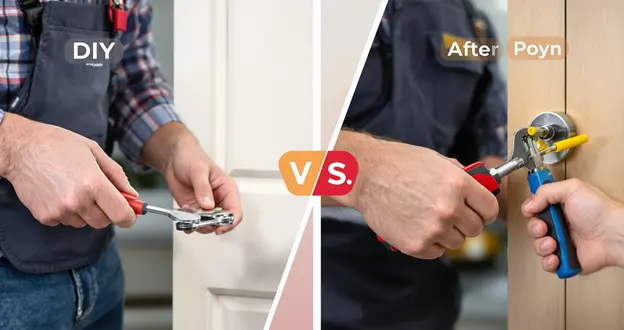

Lock problems happen to everyone. When they do, you face an immediate decision: handle it yourself or call a professional? While the internet makes DIY solutions seem simple, the reality is more complex. Knowing when to tackle lock issues yourself and when to call for help can save you time, money, and frustration.
Common Lock Problems: DIY or Professional?
Let’s break down typical lock issues and evaluate whether they’re DIY-friendly or require professional expertise.
Sticky or Stiff Lock
A key that doesn’t turn smoothly, requires force to operate, or makes grinding noises is often a simple fix. Try graphite powder or dry Teflon spray—never WD-40, which attracts dirt. Insert the lubricant into the keyway, insert and remove the key several times, and test the operation.
Success rate is high for minor sticking, especially if the lock is relatively new. Call a professional if lubrication doesn’t help within a few tries, the key starts bending when you turn it, you can’t remove the key easily, or the lock is old and showing wear.
DIY cost is five to ten dollars for lubricant. Professional service runs seventy-five to one hundred fifty dollars for repair.
Key Duplication
Hardware store key cutting machines are increasingly automated and work well for standard house keys. Success rate is high for basic keys but low for specialty keys.
Call a professional for high-security keys with restricted keyways, car keys with transponder chips, keys requiring programming, keys for commercial access systems, or specialty and antique keys.
If you need reliable key duplication with professional precision, services like Manhattan locksmith experts – Locksmith For NYC have specialized equipment and expertise for all key types, from basic house keys to complex automotive and high-security systems.
Broken Key in Lock
When a key breaks off inside the lock cylinder, you can attempt extraction with needle-nose pliers if enough key protrudes, but success rate is low to moderate depending on how deep the break is.
Call a professional if the key is broken deep in the cylinder, your extraction attempts fail within ten minutes, you push the key piece further in, or you need the lock operational quickly. Improper extraction can damage the lock cylinder, turning a fifty-dollar extraction into a one hundred fifty dollar or more lock replacement.
Situations That Always Require a Professional
Some lock situations are never good DIY projects, regardless of your skill level.
Rekeying Locks
Rekeying requires removing the lock cylinder without damage, disassembling it completely, understanding pin sizing and placement, having the correct replacement pins, and reassembling everything precisely. Springs fly out and get lost, pins end up in wrong order, cylinders won’t reassemble properly, and locks become completely non-functional.
Professional rekeying costs twenty to fifty dollars per lock. DIY failure can cost fifty to one hundred fifty dollars to replace the lock you broke.
Installing New Locks
Proper installation requires precise measurements for backset and bore holes, correct drilling without damaging the door, proper alignment of strike plate, ensuring cylinder sits flush, and testing operation before finishing.
Common DIY mistakes include holes drilled in wrong locations, doors weakened by incorrect boring, locks sitting crooked or misaligned, and strike plates mounted improperly reducing security.
DIY makes sense only if you’re replacing a lock with an identical model in existing holes. For new installations or different lock types, professionals ensure proper fit and security.
High-Security Lock Systems
High-security locks have complex mechanisms, installation affects warranty coverage, proper alignment is critical for security, and key control setup requires documentation. Professional installation costs vary but protects your investment and ensures proper function.
Commercial Access Control
Commercial systems involve complex wiring and programming, integration with building systems, code compliance requirements, and liability issues if improperly installed. Professional cost runs three hundred to fifteen hundred dollars or more depending on system complexity, but DIY failure risks security vulnerabilities, warranty voidance, and code violations.
The Hidden Costs of DIY Lock Work
Beyond obvious risks, DIY lock work carries hidden costs that aren’t immediately apparent.
DIY reality often means thirty to sixty minutes researching, thirty to sixty minutes purchasing supplies, one to four hours of actual work, unknown troubleshooting time, totaling three to six hours or more.
Professional reality is a five-minute phone call, twenty to sixty minutes for technician arrival, fifteen to forty-five minutes for work completion, totaling usually under two hours from call to completion.
Many lock tasks require specialized tools you’ll rarely use again: key extractors for fifteen to thirty dollars, pinning kits for forty to one hundred dollars, cylinder followers for ten to twenty dollars, lock picks for twenty to fifty dollars, and proper lubricants for ten to twenty dollars. One-time cost runs one hundred to two hundred dollars or more, while professional service typically costs seventy-five to one hundred fifty dollars including everything.
When DIY Makes Sense
Some lock-related tasks are genuinely suitable for DIY approaches.
Good DIY projects include:
- Basic maintenance – Lubricating locks annually, tightening loose door handles, adjusting strike plates slightly, cleaning visible dirt from locks, testing locks seasonally
- Simple upgrades – Adding a chain lock, installing a door viewer (peephole), adding security bars to sliding doors, installing door wedges or floor stops
- Smart lock replacement – When replacing existing deadbolts in the same holes with detailed instructions available
These improve security without affecting primary lock function and carry minimal risk of making things worse.
Questions to Ask Before Choosing DIY
Use these questions to determine if a lock project is genuinely DIY-appropriate.
Have I successfully completed similar projects? Do I have the necessary tools? Do I understand the mechanism involved? Can I reverse my work if something goes wrong? What happens if I fail? Will failure cost more than professional service? Is this lock critical for my security? Am I on a deadline?
Red Flags That Say “Call a Professional”
Stop DIY attempts immediately if you’re forcing anything, parts are breaking or bending, you’ve been working for over thirty minutes without progress, you’re feeling frustrated or stressed, the problem is getting worse, or you don’t understand why something isn’t working.
Finding the Right Balance
Smart homeowners know which tasks they can handle and when to call for help.
Good DIY candidates:
- Basic maintenance and lubrication
- Simple security additions
- Smart lock replacement in existing holes
- Minor adjustments to existing locks
Always call professional for:
- Rekeying
- New lock installation different from replacement
- Lock repair beyond lubrication
- Broken key extraction if DIY doesn’t work quickly
- High-security systems
- Commercial access control
- Emergency lockouts
- Automotive lock issues
The Value of Professional Expertise
Professional locksmiths bring more than just tools and technical knowledge. You’re paying for expertise solving problems quickly based on experience, proper tools and specialized equipment, warranty on work performed, insurance coverage if something goes wrong, advice and recommendations for improving security, and speed completing in minutes instead of hours.
Making the Smart Choice
The DIY versus professional decision comes down to three factors: skill level, risk tolerance, and value of your time.
For basic maintenance and simple additions, DIY makes perfect sense. For anything involving lock mechanisms, security systems, or situations where failure means replacing expensive components, professional service is the smart choice.
Remember: the goal isn’t just completing the task—it’s completing it correctly, securely, and efficiently. Sometimes that means rolling up your sleeves, and sometimes it means making a phone call. Knowing the difference is the mark of a truly handy homeowner.