
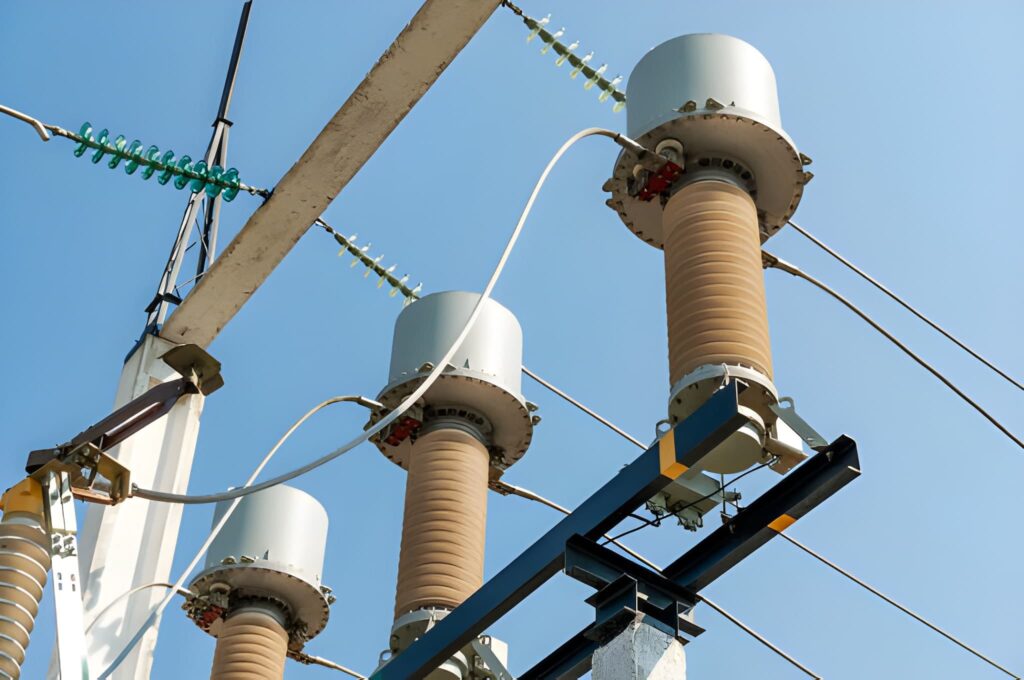

In industrial electrical systems, accurate current measurement is critical for monitoring energy consumption, protecting equipment, and optimising operational efficiency. Current transformers (CTs) play a vital role in stepping down high currents to measurable levels for metering and protection devices. Among the various types available, solid core current transformers have long been the gold standard for industrial applications where reliability, accuracy, and long-term performance are paramount.
Whilst split-core current transformers offer convenience for retrofitting, solid-core current transformers provide superior technical characteristics that make them the preferred choice for new installations and applications demanding the highest precision. This guide explores the key benefits of solid-core current transformers and why they remain essential components in industrial electrical infrastructure across the UK and beyond.
Understanding Solid Core Current Transformer Construction
Before examining their benefits, it’s essential to understand what distinguishes solid core current transformers from other types.
Closed Magnetic Circuit: Solid-core current transformers feature a continuous, unbroken ferromagnetic core, typically made from high-grade silicon steel or amorphous metal. The primary conductor passes through the centre of this closed ring, while the secondary winding wraps around the core. This closed-loop design creates a complete magnetic circuit with no air gaps.
Permanent Assembly: Unlike split-core or clamp-on current transformers that can be opened and closed, solid-core transformers are permanently closed units. The primary conductor must be threaded through the aperture during installation, meaning they’re typically installed during initial system construction or when circuits are de-energised.
Precision Manufacturing: Solid core current transformers are manufactured under tightly controlled conditions with precise core dimensions, winding ratios, and calibration. This manufacturing rigour contributes to their superior performance characteristics.
Superior Accuracy and Precision
The primary advantage of solid core current transformers is their exceptional accuracy, which is critical in many industrial applications.
Minimal Phase Error: The closed magnetic circuit eliminates air gaps that cause magnetic flux leakage. This results in extremely low phase angle errors, typically less than 0.2 degrees for Class 0.5 accuracy current transformers. Phase accuracy matters significantly in power factor calculations and revenue metering applications.
Excellent Linearity: Solid core current transformers maintain accuracy across a wide range of currents, from as low as 1% of rated current to 120% or more. This linearity ensures reliable measurements whether the machinery is running at partial load or full capacity.
Consistent Performance: Without moving parts or separable joints in the magnetic circuit, solid core CTs deliver consistent performance over decades of operation. Accuracy doesn’t degrade significantly with age, temperature fluctuations, or vibration.
Compliance with Standards: High-quality solid core current transformers readily meet IEC 61869 standards for accuracy classes ranging from 0.2S (precision metering) to 5P (protection applications). This compliance ensures compatibility with revenue-grade metering and protective relay systems.
This superior accuracy can translate to significant financial and operational benefits for applications involving energy billing, load studies, or critical process monitoring.
Enhanced Reliability and Longevity
Industrial environments demand components that perform reliably for years with minimal maintenance. Solid core current transformers excel in this regard.
Robust Mechanical Design: The permanently sealed construction protects internal components from moisture, dust, chemical contaminants, and physical damage. This environmental protection is particularly valuable in harsh industrial settings—manufacturing facilities, water treatment plants, or outdoor substations.
No Moving Parts: With no hinges, latches, or separable sections, there’s nothing to wear out, break, or become misaligned. This simplicity translates directly to reliability.
Vibration Resistance: Industrial equipment generates significant vibration. The solid construction prevents the core separation or winding displacement that can occur with split-core designs subjected to continuous vibration.
Temperature Stability: Quality solid core current transformers are designed for wide temperature ranges (typically -40°C to +70°C) with minimal performance variation. The closed core maintains magnetic properties across this range better than designs with air gaps.
Extended Service Life: With proper sizing and installation, solid core current transformers commonly operate for 30-40 years without requiring replacement or recalibration. This longevity reduces lifecycle costs and minimises system downtime.
Higher Burden Capacity and Output
The electrical output characteristics of solid core current transformers provide essential advantages for system designers.
Greater VA Output: Solid core designs typically offer higher burden capacity, the amount of load the current transformer can drive while maintaining accuracy. This allows the connection of multiple instruments, meters, or protective relays to a single current transformer without degradation in accuracy.
Lower Excitation Current: The efficient magnetic circuit requires less magnetising current, meaning more of the primary current is accurately reflected in the secondary output. This efficiency is critical at low current levels.
Better Saturation Characteristics: Controlled saturation behaviour is critical for protection applications. Solid core current transformers offer predictable saturation characteristics that help protective relays distinguish between normal overloads and fault conditions.
Flexible Secondary Ratings: Manufacturers can more easily achieve various secondary current ratings (1A or 5A being most common) with precise turns ratios, giving system designers flexibility in matching current transformers to existing infrastructure.
Optimal Performance in Critical Applications
Specific industrial applications particularly benefit from the characteristics of solid core current transformers.
Revenue Metering: Energy suppliers and prominent industrial facilities billing by consumption require the highest accuracy. Class 0.2S or 0.5S solid core current transformers ensure fair, accurate billing and help identify energy waste or theft.
Protective Relaying: Motor protection, transformer protection, and feeder protection schemes depend on accurate current measurement to detect faults quickly. The reliability and accuracy of solid core current transformers ensure protective systems respond appropriately without nuisance tripping.
Power Quality Monitoring: Understanding harmonics, power factor, and load profiles requires accurate measurement across a wide frequency range. Solid core current transformers provide consistent performance from 50Hz fundamental through higher-order harmonics.
Precision Process Control: Industries with electrically driven processes, like steelmaking, chemical production, and paper manufacturing, often use current measurement for process control. The accuracy and stability of solid-core current transformers support tight process tolerances.
Substation Applications: High-voltage substations use solid-core current transformers rated for thousands of amps of primary current. Their robust construction and accuracy make them ideal for this demanding environment.
Installation Considerations and Best Practices
Whilst solid core current transformers require de-energised installation, proper implementation ensures optimal performance.
New Construction Advantage: During new facility construction or major electrical upgrades, installing solid-core current transformers adds minimal additional labour compared to split-core alternatives. The threading process is straightforward when conductors aren’t yet energised or terminated.
Panel Integration: Many manufacturers offer current transformers pre-mounted in metering panels or switchgear, simplifying installation and ensuring proper spacing and insulation.
Adequate Planning: Because conductors must pass through the current transformer aperture, installers must verify sufficient cable length and routing before energising circuits. This planning requirement is easily managed in new installations.
Proper Sizing: Selecting the appropriate current transformer ratio and physical size ensures accuracy across the expected current range. Oversized or undersized current transformers compromise accuracy and performance.
Safety Compliance: Secondary circuits must never be opened whilst primary current flows, as this creates dangerous voltages. Proper shorting terminals and clear labelling prevent accidental opening.
Cost Considerations and Value
The total cost of ownership for solid core current transformers often proves favourable despite higher initial purchase prices in some cases.
Initial Investment: Solid core current transformers may cost slightly more than equivalent split-core units, though this varies by specification and manufacturer. The price difference is often minimal for standard ratings.
Reduced Replacement Costs: The extended service life means fewer replacements over a facility’s lifetime. A solid core current transformer installed in 1990 is likely still performing accurately today, whilst split-core alternatives may have required replacement.
Lower Maintenance Requirements: With no moving parts to inspect, lubricate, or adjust, maintenance costs approach zero. The current transformer functions reliably without regular attention.
Avoided Accuracy Degradation: Maintaining accuracy over decades prevents the hidden costs of inaccurate metering, like incorrect billing, missed energy savings opportunities, or improperly sized equipment upgrades based on faulty data.
Application-Specific Value: For revenue metering or critical protection applications, the superior accuracy may be mandatory rather than optional, making the cost comparison moot.
Selecting the Right Current Transformer
Choosing appropriate solid core current transformers requires considering several technical factors.
Current Ratio: Match the current transformer ratio to your application. The primary rating should accommodate maximum load current with some margin, whilst the secondary output matches your metering or protection equipment (typically 1A or 5A).
Accuracy Class: Revenue metering requires Class 0.2S or 0.5, protection applications use Class 5P or 10P, whilst general monitoring might accept Class 1 or 3.
Burden Rating: Ensure the current transformer can drive all connected loads (meters, relays, wire resistance) with adequate margin. Under-burdened CTs perform well; over-burdened CTs lose accuracy.
Physical Size: The aperture must accommodate your conductor(s) with adequate clearance for insulation. Consider future cable replacements or upgrades that might require larger conductors.
Environmental Rating: Indoor versus outdoor installation, temperature extremes, and pollution levels all influence current transformer selection. Specify appropriately rated enclosures and insulation.
Standards Compliance: Verify the current transformer meets relevant standards, like IEC 61869 for UK/European applications, and carries appropriate certifications for your industry or application.
Future-Proofing Industrial Installations
As industrial facilities evolve, the long-term reliability of solid core current transformers provides valuable flexibility.
Grid Modernisation: As facilities add renewable energy, energy storage, or demand response capabilities, existing solid-core current transformers continue to provide accurate measurement for these new applications.
Digital Integration: Modern digital meters and IoT-enabled monitoring systems readily interface with conventional current transformers. The standard current outputs from solid core current transformers ensure compatibility with both legacy and future monitoring systems.
Increased Monitoring Depth: The trend toward comprehensive energy management and condition monitoring means facilities need more measurement points. Solid core current transformers installed during initial construction provide data for decades of evolving monitoring needs.
Regulatory Compliance: As energy reporting regulations evolve, having accurate, reliable current measurement already in place simplifies compliance without system retrofits.
Making the Right Choice
Solid core current transformers remain the optimal choice for new industrial electrical installations where accuracy, reliability, and long-term performance are priorities. Their closed magnetic circuit design delivers superior technical performance, whilst robust construction ensures decades of maintenance-free operation.
For industrial facilities planning electrical system installations or major upgrades, specifying solid core current transformers in appropriate locations provides measurement infrastructure that will serve reliably throughout the facility’s lifetime. The modest additional planning required during installation pays dividends in accuracy, reliability, and reduced lifecycle costs.
To explore solid core current transformer options suitable for your industrial application, visit eastroneurope’s current transformers. You’ll find comprehensive specifications and guidance for selecting the proper current transformer for your specific requirements.
Accurate current measurement is the foundation of any reliable electrical monitoring or protection system. Choose solid-core current transformers for the precision and reliability your industrial operations demand.
Also Read-Trusted Business Reputation: A Must for Local Businesses


