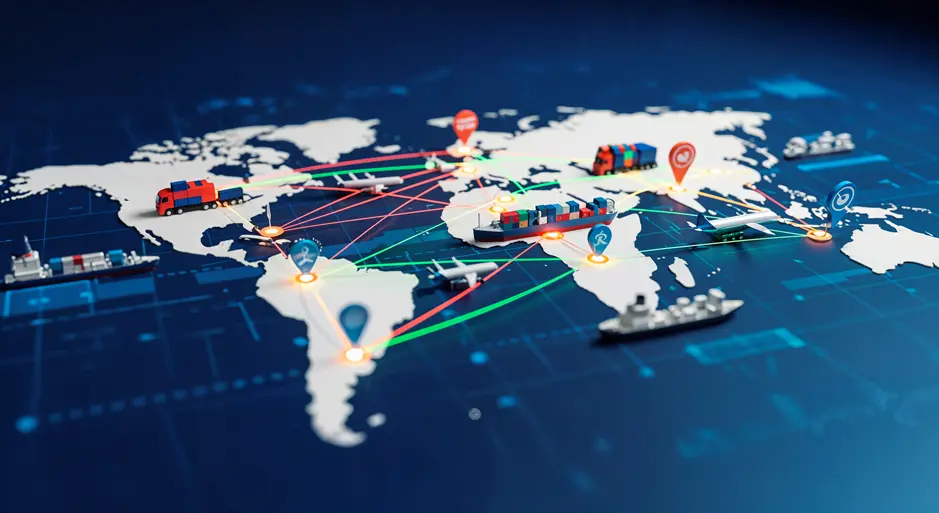

In B2B operations, understanding what is supply chain mapping is no longer optional. Global supply chains span continents, and even a minor disruption can affect production within hours. Companies without strong supply chain visibility often learn about weak points only when deliveries slip or production stalls. That is why structured supply chain mapping has become essential for modern supply chain risk management and long-term supply chain resilience.
Complex networks behave like layered ecosystems. Tier 1 suppliers are only the visible surface, while the deeper tiers often hide the vulnerabilities that matter most. A single sub-tier delay can jeopardize millions in revenue. Without mapping, these relationships remain concealed and weaken preparedness.
Why Mapping Exposes Hidden Risks
A practical way to understand what is supply chain mapping is to view it as systematic intelligence building. Most disruptions occur upstream, yet many organizations monitor only their immediate suppliers. With limited supply chain visibility, even experienced teams struggle to forecast how fast shocks travel across the network.
Example: A European electronics producer believed it had three independent suppliers for a low-cost plastic housing. Once it completed thorough supply chain mapping, it learned that every supplier relied on the same Tier 2 specialist. The part cost less than a dollar, but a failure in that single facility could have halted production. By integrating this discovery into its supply chain risk management, the company reduced its exposure and strengthened supply chain resilience.
This is the core value of visibility. When risks become visible early, decisions shift from improvisation to informed planning.
What Effective Supply Chain Mapping Looks Like
Executives often begin with the question what is supply chain mapping, but true implementation goes deeper. Mapping identifies how materials, information, and money move through all supplier tiers. It reveals geographic concentrations, logistics dependencies, and operational chokepoints that traditional procurement documents never show.
Improved supply chain visibility often uncovers surprising patterns. Several component suppliers may claim independence yet rely on the same Tier 2 processor. A single transport route might be vulnerable to seasonal weather. With full supply chain mapping, these issues transform from hidden threats into manageable insights that support better supply chain risk management and stronger supply chain resilience.
Why Traditional Procurement Misses Upstream Issues
Procurement teams handle contracts and pricing well, but that alone does not create meaningful supply chain visibility. Many systems were designed for stable, predictable markets. If a Tier 1 supplier performs reliably, buyers often assume the rest of the chain is stable too. In reality, vulnerabilities tend to concentrate in the tiers nobody watches.
Geographic clustering is a common blind spot. A buyer might believe its suppliers are diversified until mapping reveals that several operate in the same industrial zone. A local outage could affect them all at once. When firms adopt structured supply chain mapping, these risks become visible early, feeding into more effective supply chain risk management and reinforcing supply chain resilience.
When teams finally map their upstream networks, several recurring weak spots tend to appear. The patterns are surprisingly consistent across industries. A few of the most common red flags are captured below.
| Red flag | What it means in practice | What is the threat |
| Single source dependency | One part or material comes from a single upstream provider, often outside Tier 1 oversight | Creates hidden chokepoints that disrupt production when even minor incidents occur |
| Geographic clustering | Multiple suppliers located in the same region or industrial zone | Local outages (weather, power, labor strikes) can halt several suppliers at once |
| Unusually long or variable lead times | Lead times fluctuate without clear reason | Indicates upstream instability that becomes visible only through supply chain mapping |
| Tier 2 or Tier 3 concentration | Several Tier 1 suppliers rely on the same sub-tier partner | Introduces risk that procurement teams usually overlook due to limited mapping |
| Missing compliance or ESG data | Suppliers fail to provide environmental or labor documentation | Exposes companies to regulatory penalties and reputational risk |
| High logistics dependency | Shipments rely on a single route, port, or carrier | Transportation delays amplify quickly and reduce overall operational resilience |
| Lack of financial transparency | Suppliers hide true production capacity or ownership structure | Limits long-term planning and weakens supply chain risk management |
Seven Steps to Building Real Visibility
Once leaders understand what is supply chain mapping, they need a process that turns theory into actionable intelligence. A structured approach ensures the data collected actually supports decision-making.
- Catalogue every relevant supplier
Map Tier 1, Tier 2, and deeper network partners to build foundational supply chain visibility. - Collect operational and geographic information
Production capacity, transit routes, and cost structures form the core of practical supply chain mapping. - Trace flows, not only suppliers
Tracking how materials move strengthens supply chain risk management by showing where disruptions can spread. - Identify risk categories that matter
Geographic exposure, ethical compliance, and single-source reliance all shape supply chain resilience. - Create visual representations of the network
Maps and diagrams make supply chain visibility actionable. - Look for bottlenecks and concentration points
These insights guide the next wave of supply chain mapping improvements. - Refresh data regularly
Markets change quickly, and updated information is essential for ongoing supply chain resilience.
Organizations that follow these steps typically predict risks sooner and respond with greater precision.
How Visibility Becomes a Competitive Advantage
Once firms gain meaningful supply chain visibility, an important shift occurs. Decision-making accelerates, sourcing becomes proactive, and exposure to volatility decreases. This is where supply chain mapping delivers its real value. It turns risk from a sudden crisis into a managed scenario.
Example: A mid-sized automotive supplier in Central Europe used structured supply chain risk management to uncover that two critical components shared the same Tier 2 treatment provider. It created a backup option before disruption hit. When the original provider experienced an outage, competitors struggled to secure capacity. The mapped company maintained production, showing how supply chain resilience becomes a practical advantage, not just a strategic aspiration.
Final Takeaway
Understanding what supply chain mapping is is the starting point. Treating mapping as ongoing infrastructure is what sets leading companies apart. Strong supply chain visibility supports clearer planning, structured supply chain risk management reduces financial and operational shocks, and long-term supply chain resilience becomes an achievable goal. As supply networks grow more complex, mapping provides the clarity that modern decision-making demands.
Sources
https://www.semantic-visions.com/solutions/multi-tier-supply-chain-mapping
https://www.americanexpress.com/en-gb/business/trends-and-insights/articles/supply-chain-mapping
https://dclcorp.com/blog/supply-chain/supply-chain-mapping
Also Read-Mastering Paper Scoring Creaser Techniques for Flawless Folds