


Power outages have become increasingly common across the United States, with extreme weather events causing millions of homes to lose electricity each year. From hurricane-induced blackouts along the coast to winter storms knocking out power grids inland, homeowners are discovering that traditional backup solutions often fall short when they’re needed most. Gas generators require constant fuel supplies, produce harmful emissions, and create noise that can disturb entire neighborhoods during already stressful times.
Solar generators represent a revolutionary approach to home backup power, combining clean energy technology with reliable emergency preparedness. These innovative systems harness the sun’s energy to charge powerful battery banks, providing silent, emission-free electricity when the grid fails. Unlike fuel-dependent alternatives, solar generators offer true energy independence, allowing homeowners to maintain essential power for days or even weeks during extended outages while contributing to a more sustainable future.
Understanding Solar Generators for Home Backup
Solar generators operate through a three-component system that transforms sunlight into reliable household electricity. Solar panels capture photons and convert them into direct current, which flows into high-capacity lithium batteries for storage. When power is needed, an inverter transforms the stored DC energy into alternating current that matches your home’s electrical requirements. This seamless process creates a self-sustaining power source that requires no fuel, produces zero emissions, and operates in complete silence.
The advantages over traditional gas generators extend far beyond environmental benefits. While gas generators announce their presence with loud engines and noxious fumes, solar generators work quietly in the background, making them ideal for residential areas and extended use. They require minimal maintenance compared to combustion engines, eliminating the need for oil changes, spark plug replacements, or carburetor cleaning. During emergencies, solar generators excel at powering critical medical devices like CPAP machines, preserving refrigerated medications and food, and maintaining communication through charged phones and internet equipment. This clean technology also supports long-term sustainability goals while providing genuine energy independence that doesn’t rely on fuel supply chains during widespread disasters.
Essential Features for Home Backup Solar Generators
Power Capacity and Output Requirements
Determining your home’s emergency power needs starts with calculating the watt-hour consumption of essential appliances. A typical refrigerator draws 150-400 watts continuously, while LED lights consume just 10-15 watts each. Medical devices like CPAP machines require 30-60 watts overnight, and phone chargers need minimal power at 5-10 watts. Pure sine wave inverters prove crucial for sensitive electronics, delivering clean power that matches grid electricity quality and prevents damage to computers, medical equipment, and modern appliances with digital controls. Surge capacity becomes vital when starting motor-driven devices like refrigerators or sump pumps, which can demand 3-5 times their running wattage during startup.
Battery Technology and Solar Charging
LiFePO4 batteries outperform traditional NMC chemistry for home backup applications, offering 3,000+ charge cycles compared to 800-1,000 cycles, plus enhanced safety with no thermal runaway risk. Solar input efficiency directly impacts recovery time during extended outages – look for systems accepting 200+ watts of solar input for faster daytime recharging. Dual charging capabilities allow simultaneous solar and AC charging when grid power returns, maximizing preparation time between outages.
Portability and Durability Factors
Home backup generators should weigh under 30 pounds for easy relocation between rooms during emergencies. Weather resistance ratings of IP54 or higher protect against dust and water splashes during outdoor solar charging. Compact designs enable storage in closets or basements while maintaining accessibility during crisis situations.
Top Solar Generators for Home Backup
EcoFlow RIVER 3: Compact Powerhouse
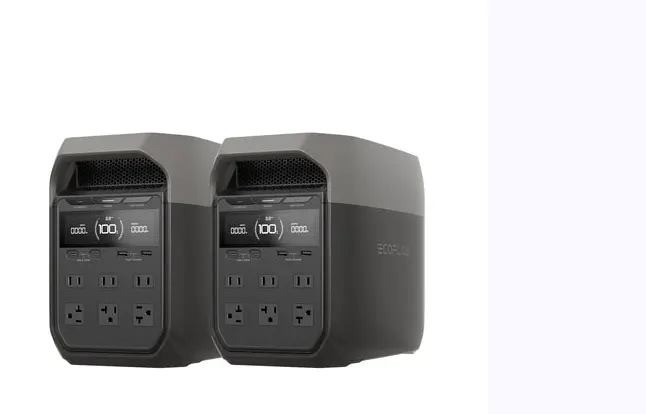
The EcoFlow RIVER 3 delivers exceptional performance in a remarkably portable package, featuring 600 watts of continuous power output and 245Wh capacity that can handle most emergency situations. Its LiFePO4 battery technology provides over 3,000 charge cycles, ensuring reliable performance for years of emergency preparedness. During real-world power outages, this generator can run a refrigerator for 4-6 hours, power LED lights throughout the night, and keep essential devices charged for days. Weighing just 16 pounds with integrated handles, it moves easily between rooms or outdoor solar charging locations, making it ideal for apartments, small homes, or as a secondary backup system for larger properties.
Other Leading Models Comparison
For extended outages lasting multiple days, higher-capacity models like the Bluetti AC200MAX offer 2,048Wh storage and 2,200W output, capable of powering entire refrigerators, medical equipment, and communication devices simultaneously. Mid-range options such as the Jackery Explorer 1000 balance affordability with 1,002Wh capacity, providing substantial backup power without premium pricing. Key differentiators include solar input speeds ranging from 100W to 400W, affecting daytime recovery rates, and expandable battery systems that allow capacity increases through additional power stations or external battery packs. Weight considerations become critical above 1,000Wh capacity, with most units exceeding 25 pounds and requiring dedicated storage locations rather than portable deployment throughout the home.
Selecting Your Ideal Home Backup System
Assessing Your Household’s Needs
Calculate your critical appliance loads by identifying devices that must remain operational during outages. Essential items typically include refrigerators consuming 150-400 watts, medical equipment like CPAP machines requiring 30-60 watts, LED lighting at 10-15 watts per bulb, and communication devices needing minimal power. Multiply each device’s wattage by expected runtime hours to determine total watt-hour requirements. For example, running a 200-watt refrigerator for 12 hours requires 2,400 watt-hours of capacity.
Balancing Budget and Performance
Entry-level systems under 500Wh capacity cost significantly less but limit runtime to essential devices only, while 1,000Wh+ systems provide multi-day backup power at premium pricing. Consider expansion capabilities when budgeting – modular systems allowing additional battery packs or solar panels offer better long-term value than fixed-capacity units. Factor in the cost per watt-hour over the battery’s lifespan, as LiFePO4 systems with 3,000+ cycles often prove more economical than cheaper alternatives requiring earlier replacement. Space constraints in apartments may justify compact, higher-cost solutions over bulky budget options that cannot be properly stored or deployed during emergencies.
Setup and Emergency Use Guide
Step 1: Initial Configuration
Position your best solar generator for home backup in a well-ventilated area away from heat sources, maintaining at least 12 inches of clearance on all sides for proper airflow during operation. Store the unit with battery levels between 50-80% charge, avoiding complete discharge that can damage lithium cells over time. Essential accessories include compatible solar panels rated for your generator’s input capacity, heavy-duty extension cords for reaching distant appliances, and a surge protector to safeguard sensitive electronics during power transitions.
Step 2: Emergency Operation
During outages, prioritize powering medical devices first, followed by refrigeration to preserve food and medications. Connect appliances one at a time to avoid overwhelming the inverter’s surge capacity, especially when starting motor-driven devices. Position solar panels in direct sunlight during daylight hours, angling them toward the sun and cleaning debris regularly to maximize charging efficiency. Monitor battery levels through the display or mobile app, rotating device usage to extend runtime throughout extended emergencies.
Step 3: Maintenance for Reliability
Perform monthly battery maintenance by cycling through a complete charge-discharge cycle, then storing at 60% capacity in temperatures between 32-77°F. Inspect solar panels quarterly for cracks or corrosion, cleaning surfaces with mild soap and water. Update firmware through manufacturer apps when available, as these updates often improve charging efficiency and add new features that enhance emergency preparedness capabilities.
Making the Right Solar Generator Choice
Selecting the right solar generator for home backup requires careful consideration of three critical factors: power capacity matching your essential appliance loads, solar charging speed for recovery during extended outages, and portability enabling flexible deployment throughout your home. Compact models like the EcoFlow RIVER 3 exemplify the ideal balance for most households, delivering substantial power in portable packages that move easily between rooms while providing days of emergency electricity for medical devices, refrigeration, and communications.
Investing in solar backup power creates genuine energy resilience that protects your family during increasingly frequent weather-related outages while supporting long-term sustainability goals. Unlike fuel-dependent alternatives, solar generators provide true independence from supply chain disruptions and eliminate the ongoing costs of gasoline or propane. Take time to calculate your household’s critical power needs, consider future expansion requirements, and evaluate storage space limitations. With proper planning and the right solar generator, you can transform unpredictable power outages from family emergencies into minor inconveniences, maintaining comfort and safety regardless of grid conditions.
Also Read-