
Introduction
The world of fragrance development sits at the intersection of creativity, chemistry, and sensory perception. Brands invest heavily in crafting scents that spark emotion, nostalgia, or desire—which means the accuracy of testing is crucial for ensuring each product’s appeal and consistency. Through rigorous fragrance product testing, companies can develop perfumes that captivate consumers from the initial spray to the dry-down.
Sensory science has long provided the scientific foundation for fragrance evaluation, combining human intuition with measurable and repeatable insights. As the global fragrance market continues to grow, the methodologies behind scent assessment have evolved to reflect the importance of reliability, artistry, and consumer satisfaction.
Traditional techniques remain foundational, but the modern landscape is shaped by new technology and innovation, aiming to enhance both objectivity and accuracy while honoring the very personal nature of scent.
Evaluating fragrances isn’t just about identifying pleasant notes—it’s about consistency and safety, which has made the field one rich in both tradition and technology. With advances in analytical instruments and machine learning, this convergence is setting a new gold standard for how fragrances are crafted and brought to market.
The Role of Sensory Science in Fragrance Development
Sensory science serves as the compass guiding fragrance development. Trained panels, sometimes referred to as “noses,” systematically assess aromas using clearly defined protocols and language. This evaluation covers everything from the sharpness of citrus top notes to the lingering warmth of a woody base. By collecting and analyzing human reactions, fragrance companies can refine their formulas to match consumer preferences and emerging market trends better.
The expertise behind this process yields not only successful scents but also the ability to differentiate brands in an increasingly crowded industry. According to coverage in The Wall Street Journal, master perfumers and well-calibrated sensory teams often create the iconic scents that become household names, using structured testing to ensure broad appeal.
Traditional Methods of Fragrance Testing
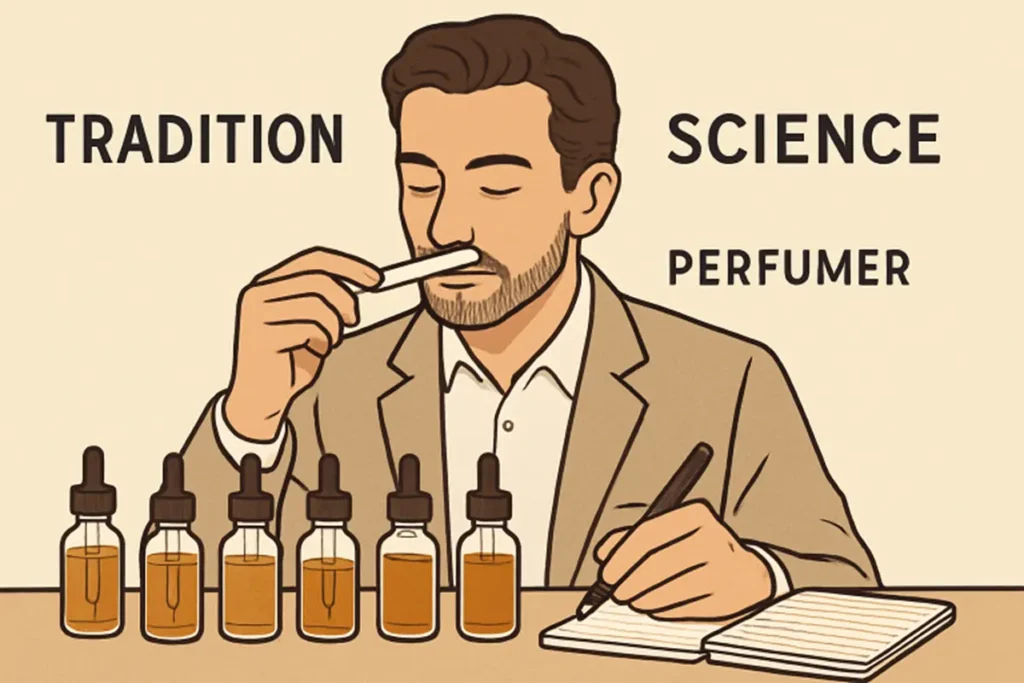
Traditional fragrance testing leans on human intuition—a carefully curated sense memory built over years of training. Key components of these tests include:
- Olfactory Assessment: Experts break down each fragrance into its constituent notes, from sparkling top notes to the slower-developing base, describing their intensity and character.
- Longevity Testing: Perfumed blotters and actual skin wear evaluate how each element evolves, confirming that the scent remains true and pleasant throughout its anticipated lifespan.
- Sillage Evaluation: This measures the trail a scent leaves as the wearer moves through a space, an important attribute for those seeking noticeable yet balanced luxury aromas.
While these methods are deeply insightful, they are not entirely objective. Panelists’ responses can be influenced by a range of factors, from a previous meal to their cultural background, adding subtle complexity to the results.
Technological Advancements in Scent Evaluation
Modern fragrance development has embraced analytical chemistry to supplement traditional sensory methods. Gas chromatography-mass spectrometry (GC-MS), for example, precisely separates and identifies each compound within a fragrance. This enables the construction of detailed “fingerprints” for every scent, ensuring batch-to-batch consistency and allowing for the detection of even the slightest deviations in formulation.
In addition to analytical instrumentation, electronic noses—with arrays of sensors designed to detect volatile organic compounds—offer automated, high-throughput options for quality assurance. These systems extend human ability, flagging inconsistencies and offering new routes for research and development. Coverage of these advancements highlights groundbreaking shifts in how fragrances are both designed and detected, opening up new avenues for enhanced creativity.
The Impact of AI on Fragrance Creation
Artificial Intelligence (AI) has become a catalyst for innovation in the fragrance industry. Advanced algorithms can now interpret libraries of scents, chemical compositions, and consumer feedback to suggest or even generate new perfume formulas. AI models analyze mass spectrometry data from essential oils and raw materials, automating the process of blend creation and reducing the need for traditional trial-and-error.
Research suggests that generative AI not only accelerates the fragrance development cycle but also promotes diversity in scent profiles, providing independent and established brands alike with powerful new tools for ideation.
Challenges in Fragrance Testing
Even as science and technology continue to advance, key challenges persist. Scent is deeply personal and influenced by memory, context, and even subconscious association. Two people can describe the same scent in vastly different terms, complicating consensus and consistency. While machines have become adept at identifying chemical signatures, replicating the full complexity of human olfaction remains a profound technical challenge.
Ensuring safety and allergen transparency has also become more demanding due to growing regulatory scrutiny, meaning every note must not only smell right but also be thoroughly tested for consumer well-being.
Future Directions in Fragrance Evaluation
The coming years will likely bring even greater synergy between human expertise and technology. Ongoing research into “electronic noses” and the training of AI systems on massive datasets suggests a horizon where both accuracy and artistry thrive. Expanded global data and consumer feedback are shaping smarter, more flexible algorithms that can detect nuance in scent far beyond today’s standards.
There’s reason to believe that the perfume creation process will become even more collaborative, involving input from both expert panels and high-tech tools, resulting in more sophisticated and universally beloved scents.
Conclusion
Sensory science and fragrance testing embody a remarkable blend of art and technology. Traditional methods continue to provide deep, intuitive insight, while rapid advances in chemistry and artificial intelligence are ushering in a new era of precision and creativity. As brands strive to enchant consumers with their latest offerings, the evolving science of scent evaluation will remain at the heart of great fragrance design—ensuring products that surprise, delight, and endure.