
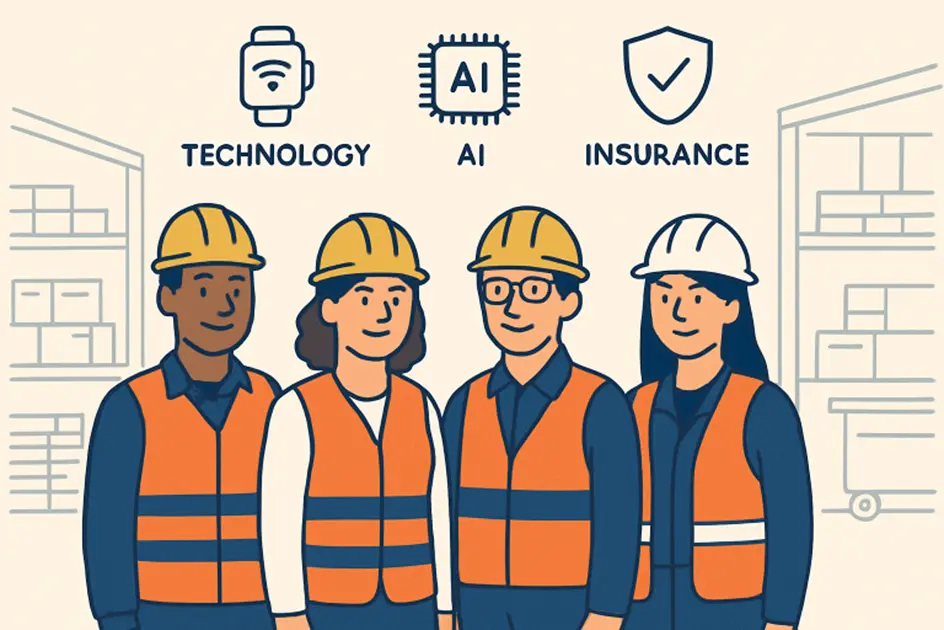

Workplace safety has undergone significant evolution, with a growing emphasis on proactive risk management and employee well-being. Central to this transformation is worker’s comp insurance a financial and regulatory driver that motivates employers to create and maintain safer environments. Not only does this insurance shield employees against work-related injuries, but it also inspires organizations to invest in systems and strategies that reduce risk and enhance operational productivity.
Employers today understand that promoting workplace safety serves dual purposes: protecting their personnel and controlling the financial impact of injuries. With state and federal regulators tightening safety requirements and offering incentives for adherence, workplace injury prevention has become a cornerstone of responsible business practice. Companies that foster robust safety programs not only experience fewer employee injuries but also gain a financial advantage through reduced insurance costs over time.
Modern risk reduction goes beyond merely complying with standards; it requires leveraging both policy incentives and emerging technologies to predict, prevent, and mitigate workplace hazards. As the ecosystem grows more complex, the relationship between workers’ compensation programs and workplace culture is also deepening—effective programs catalyze higher morale and productivity among employees.
Further, the integration of artificial intelligence and wearable devices is setting new standards for what technology can contribute to workplace safety. These tools enable real-time monitoring, granular risk assessment, and data-driven decision-making, shifting safety programs from a reactive to a proactive paradigm.
Financial Incentives for Safety Programs
Employers have a real opportunity to reduce their overhead by proactively engaging in workplace safety initiatives. Many states incentivize injury prevention by offering significant workers’ compensation insurance discounts to companies that implement and maintain certified safety programs. For example, Pennsylvania’s five percent discount for employers with certified safety committees has collectively saved businesses over $900 million since its inception, according to state data. These financial rewards not only offset the costs of implementing safety protocols but also underscore the tangible advantages of prioritizing employee welfare.
The structure of premium calculations is designed to reward low claim frequency and severity, motivational factors that prompt continual safety improvements. When fewer claims are filed or claims are less severe, insurance premiums tend to decrease. This directly incentivizes employers to develop comprehensive training, communication, and hazard mitigation programs that have a lasting impact and measurable outcomes.
Impact on Employer Costs and Employee Morale
Companies that maintain an exemplary safety record benefit in several key ways. Reduced workplace injuries result in fewer compensation claims, and as a consequence, lower direct insurance expenses. However, beyond cost savings, investing in employee safety yields significant organizational benefits—employees are more likely to feel valued and secure, which in turn fuels higher retention, greater job satisfaction, and enhanced productivity.
There is also a ripple effect: when workers know that their employers are committed to their safety, they become more engaged in their roles and are less prone to absenteeism and burnout. Research has highlighted a positive correlation between workplace safety and employee morale, indicating that a rigorous safety program can even give companies a competitive edge in recruiting.
Technological Advancements in Workplace Safety
Recent breakthroughs in artificial intelligence and wearable technology are changing how organizations approach workplace safety. AI enables employers to automate compliance, manage injury reports, and assess risk factors with precision and efficiency. For example, AI-driven safety platforms can identify patterns in incident reports, uncover overlooked hazards, and provide actionable insights for targeted interventions.
Wearable devices, such as smart helmets, wristbands, and vests, monitor physiological and environmental factors in real-time, instantly alerting workers and supervisors to potential dangers. These tools collect data—like motion, strain, and exposure to toxic agents—that can inform company-wide safety practices and prevent accidents before they occur.
Adopting these technologies translates into fewer lost workdays and improved health outcomes, sending a clear signal that the company values innovation as part of its safety culture. Employers gain deeper insights into high-risk processes and can fine-tune safety protocols for continuous improvement.
Legal and Ethical Considerations
While digital evolution is a powerful force for good, it is not without challenges. The use of artificial intelligence in claims management and safety oversight must comply with privacy regulations, such as HIPAA. Organizations must carefully safeguard any employee data recorded by wearable devices. Moreover, legal debates continue regarding the admissibility and ethical use of AI-generated documentation, as well as employees’ rights to opt out of certain types of monitoring.
Balancing innovation with compliance is crucial; employers must regularly update their policies to reflect evolving laws and changing worker expectations. Companies leading in this area tend to establish transparent protocols that respect employee privacy while maximizing the safety benefits of new technology.
Case Studies of Successful Implementation
Organizations across various industries are seeing measurable benefits from robust safety programs tied to workers’ compensation. For instance, the Suburban Health Organization in Indiana collaborated with risk advisors to enhance safety standards and reduce claims. Their approach resulted in a 75% better lost-time frequency rate than their industry peers and a 20% reduction in overall workers’ compensation costs within four years. Such outcomes highlight that the combined approach of financial incentives, cultural change, and technology-driven insight can deliver exceptional results for both employers and employees. For more information, refer to the Spotlight on Success article.
Conclusion
Workers’ compensation insurance is more than a legal requirement—it’s a vital instrument for building safer, more resilient workplaces. When employers leverage insurance incentives and technological advances alongside a safety-first culture, they not only reduce injuries and cut costs but also foster a stronger, more engaged workforce. As the nature of work continues to evolve, prioritizing employee safety will remain an essential driver of long-term business success.