
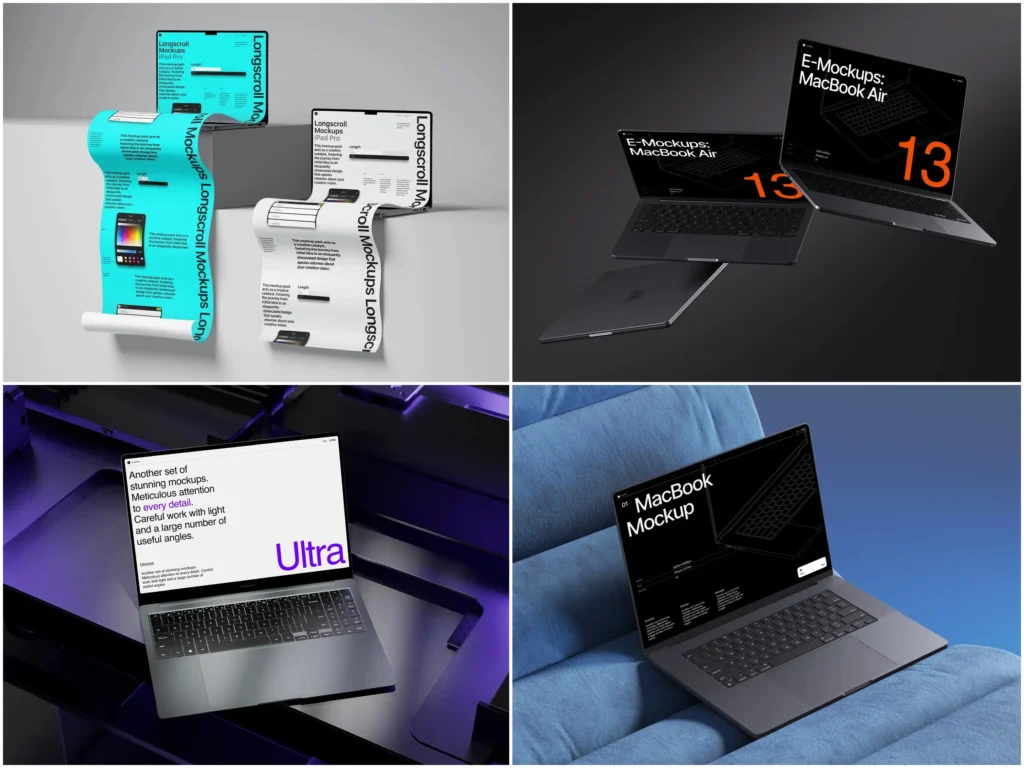

Every developer knows the sinking feeling of discovering a UI flaw after deployment. A misaligned navigation bar, illegible text on certain screen sizes, or a color scheme that looked perfect in Figma but falls flat in context. These issues cost time, credibility, and sometimes clients. Enter the laptop mockup: a deceptively simple tool that’s becoming indispensable in the modern development workflow.
The Pre-Deployment Reality Check
Before code hits production servers, it needs scrutiny beyond technical testing. A laptop mockup places your interface in a realistic context, revealing how users will actually experience your design. When a banking app dashboard appears on a sleek MacBook screen rather than an abstract artboard, suddenly that oversized logo or cramped sidebar becomes impossible to ignore.
Consider a SaaS startup preparing to launch their project management tool. Their developer team spent weeks perfecting the interface in isolated browser windows. But when they rendered screenshots in laptop mockups for their landing page, they noticed the sidebar consumed nearly 40% of screen real estate on standard laptop displays. This single observation triggered a redesign that improved usability scores by 23% in beta testing.
Spotting Issues That Testing Misses
Automated tests catch broken links and console errors. Human testers find confusing workflows. But some problems only surface when you see your interface as users will: on actual hardware, in actual environments. Laptop mockups simulate this perspective without requiring physical devices or elaborate photography setups.
Real-world applications prove the value:
- An e-commerce platform discovered their checkout button disappeared into the background when viewed on laptop mockups with bright ambient lighting effects, prompting a contrast adjustment that reduced cart abandonment by 11%
- A healthcare portal identified that patient data tables became overwhelming when displayed at realistic laptop screen dimensions, leading to a pagination redesign
- An educational app found their video player controls were too small when validated through laptop mockup presentations, avoiding accessibility complaints
Why Developers Choose Premium Mockup Resources
Quality matters when validation depends on realism. Premium platforms like ls.graphics deliver laptop mockups that go beyond basic templates:
- Ultra-realistic rendering with accurate reflections, shadows, and photographic material textures
- Organized layers with smart objects for instant screen replacement
- Multiple angles from straight-on to dynamic three-quarter views for comprehensive validation
- Various color styles including silver, space gray, and midnight finishes
- Stylish minimalistic compositions that keep focus on the interface
Most importantly, these mockups are exceptionally easy to use—even developers without design experience can create polished presentations in under five minutes.
Integration Into Development Workflows
Smart teams incorporate laptop mockups at multiple validation checkpoints. During sprint reviews, mockups help stakeholders visualize progress without technical jargon. Before deployment, they serve as final sanity checks. Post-launch, they document interface evolution for case studies and portfolios.
A fintech development team implemented a “mockup milestone” rule: no feature reaches staging without laptop mockup validation screenshots in the pull request. This simple policy caught 34 UI inconsistencies in their first quarter alone—issues that would have required hotfixes and apology emails to users.
The Competitive Advantage
In markets where user experience differentiates winners from also-rans, anything that improves interface quality before users encounter problems delivers measurable value. Laptop mockups cost nothing compared to the expense of fixing deployed code, managing user complaints, or losing customers to competitors with more polished interfaces.
Conclusion
The gap between development environments and user reality has always challenged developers. Laptop mockups bridge that gap elegantly, transforming abstract interfaces into tangible experiences that reveal problems while they’re still cheap to fix. Whether you’re validating a minimum viable product or polishing an enterprise application, these tools deserve a permanent place in your pre-deployment checklist. The minutes invested in mockup validation consistently save hours of post-deployment damage control.
Read more: Transform Your Living Space with the Warmth of a Brown Rug
Understanding fragrance duplication and its impact on luxury scents
Including Cooling Considerations Into the Control Panel Design of Industrial Systems