

Introduction
To stay ahead in today’s rapidly evolving industrial environment, companies must ensure their critical assets are performing at their best. Traditionally, organizations have relied on basic maintenance approaches, but these often result in unplanned outages, higher costs, and lost productivity. Modern asset performance management software and enterprise AI solutions are shifting the paradigm. Leveraging advanced analytics, machine learning, and intelligent automation, these technologies are fundamentally redefining how businesses manage and optimize their assets.
The strategic deployment of AI enhances visibility into asset health, drives more innovative maintenance planning, and allows operations teams to anticipate issues before they escalate. By integrating AI systems, companies gain real-time insight and decision support—moving maintenance from reactive routines towards a more predictive, proactive model. Adopting such approaches delivers advantages in efficiency, cost reduction, and reliability, giving businesses a definitive edge.
The Shift from Reactive to Predictive Maintenance
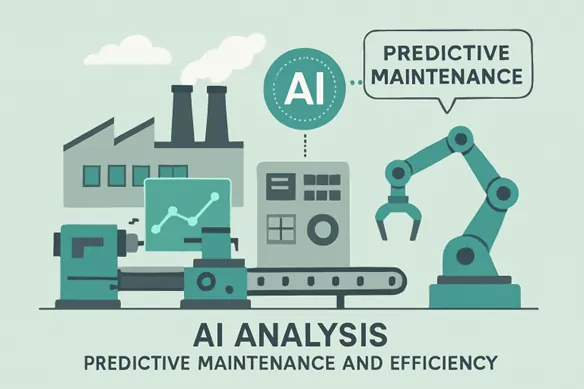
For decades, many organizations have operated reactively, fixing equipment only after it fails. While straightforward, this method is resource-intensive and costly, often bringing critical operations to a halt at precisely the moment when continuity matters most. Predictive maintenance, enabled by enterprise AI, uses data collected from sensors, historical records, and operational systems to forecast when a machine is likely to require attention.
Through predictive algorithms, companies spot patterns and anomalies that human analysis might miss. By doing so, they can preemptively schedule repairs, order parts, and allocate technicians—avoiding large-scale disruption and extending equipment lifespans. Notably, IBM has demonstrated how AI-powered agents streamline predictive maintenance, directly connecting operational data with intelligent workflows to keep assets performing optimally. The result is a powerful transition from “break-fix” operations to efficient, predictive strategies.
Enhancing Operational Efficiency with AI
Asset performance management powered by AI provides operations leaders with a comprehensive, continuously updated view of their entire asset base. By leveraging advanced machine learning models, these platforms can rapidly process large volumes of operational data from sensors, logs, maintenance histories, and environmental inputs to detect subtle shifts in equipment condition long before they trigger failures. Instead of reacting to issues after they occur, organizations can anticipate disruptions with precision and implement interventions at the optimal moment. As a result, downtime is minimized, maintenance becomes more targeted, and resources can be allocated based on actual need rather than rigid routines. This data-driven approach makes enterprise operations leaner, more resilient, and far more agile in adapting to evolving demands.
Recent innovations, such as those emerging from the collaboration between Hewlett Packard Enterprise and NVIDIA, demonstrate how AI-driven insights can extend far beyond simple maintenance tasks. With enhanced computational power and real-time analytics, modern asset performance platforms can now facilitate complex workflows like energy optimization, reducing unnecessary consumption and lowering operational costs across entire facilities. They also enable continuous environmental monitoring to ensure safety, compliance, and sustainability objectives are met without manual oversight. Furthermore, automated compliance management tools help organizations streamline regulatory reporting and reduce human error. Collectively, these robust capabilities empower industries such as manufacturing, oil and gas, utilities, and transportation to optimize every phase of the asset lifecycle from deployment and daily performance to long-term health and strategic planning, ultimately unlocking new opportunities for efficiency, innovation, and growth.
Data-Driven Decision Making
At the core of this AI revolution is data—its effective collection, analysis, and application. With AI and IoT integration, companies now have access to continuous streams of contextual information. Data-driven insights inform decisions not only on maintenance but also on capital investment, supply chain management, and operational risk. For example, SAP’s Intelligent Asset Management suite illustrates how connected assets can continuously feed data into centralized platforms, driving both immediate operational responses and longer-term strategic planning.
Implementing sophisticated analytics allows businesses to generate actionable intelligence from their operational data. This empowers everyone, from field technicians to executive leaders, to make timely, evidence-based decisions. As organizations refine their data management and AI capabilities, the depth and quality of insights generated continue to improve.
Real-World Applications and Success Stories
Across industries, leading companies are demonstrating the ROI of AI in asset management. Enterprises across manufacturing, energy, healthcare, and transport have partnered with technology providers such as Capgemini and NVIDIA to rapidly deploy scalable AI solutions that address unique operational challenges. In healthcare, AI-driven monitoring of critical infrastructure reduces equipment outages, directly supporting patient care. In energy, predictive maintenance keeps turbines and transformers running efficiently, supporting grid reliability and sustainability. Real-world use cases highlight not only operational benefits but also significant bottom-line improvements and competitive gains.
Challenges and Considerations
Despite clear advantages, integrating enterprise AI is not without its difficulties. Data privacy, especially with connected assets and IoT devices, requires strict governance and cybersecurity measures. Interoperability is also crucial: legacy assets and IT systems must seamlessly connect with modern AI applications to avoid information silos. Furthermore, employees must be trained to interpret and act on AI-generated insights, rather than blindly rely on algorithms. Finally, up-front investment in integration and change management can be significant; having a clear roadmap ensures ROI isn’t delayed.
Future Trends in AI-Driven Asset Management
As AI technologies advance, asset performance management is entering a new era. Edge computing is becoming essential, enabling immediate data processing at the source and improving the accuracy and timeliness of insights. Continued improvements in AI models mean even greater predictive accuracy, adaptive recommendations, and increased automation across workflows. The integration of AI with blockchain and advanced robotics is also opening up new avenues for secure, fully automated maintenance and asset verification.
Conclusion
The integration of enterprise AI solutions in asset management is now a defining factor for operational success, reshaping how organizations monitor, maintain, and optimize their most critical assets. With advanced analytics, machine learning algorithms, and intelligent automation at the core of modern systems, businesses can detect inefficiencies early, prevent costly downtime, and make informed decisions with unprecedented precision. This shift from reactive to predictive operations represents not just a technological upgrade but a strategic evolution in how companies safeguard productivity and profitability.
By adopting predictive, data-driven strategies, organizations achieve greater reliability, higher efficiency, and more substantial competitiveness across every operational layer. AI-powered asset performance management enables real-time insights, streamlined workflows, and more consistent output quality, benefits that directly translate into long-term cost savings and stronger financial performance. These intelligent systems continually learn and adapt, allowing companies to fine-tune maintenance schedules, improve resource allocation, and extend the lifespan of machinery, equipment, and infrastructure.
Read more: The Ultimate Guide to Time Management
Mercier Hoodie December Offers – Must-Have Streetwear for Winter 2025
How to Find the Ideal Crash Gaming Strategy When Playing Aviator