
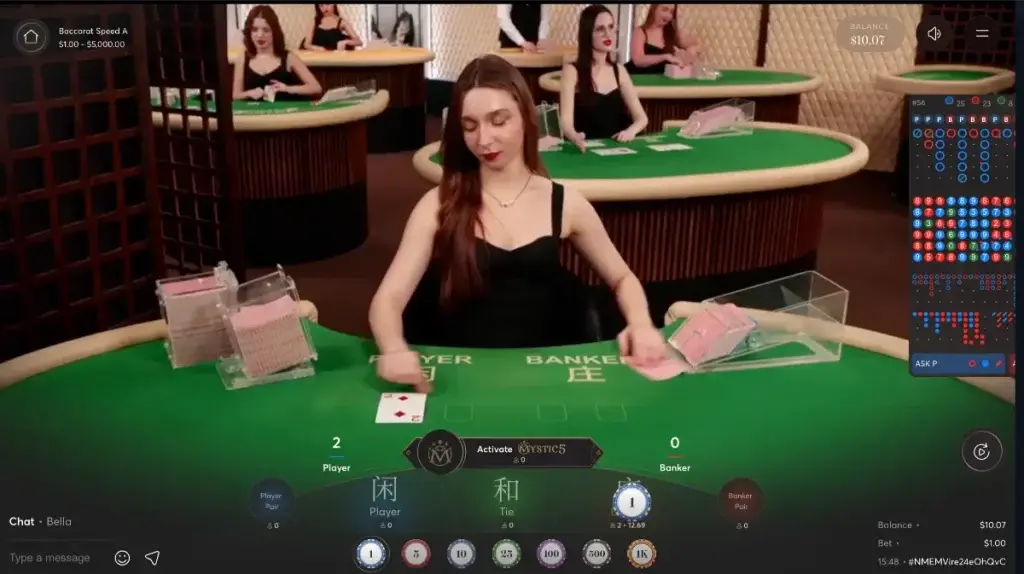

Most baccarat advice focuses on quick in-and-out sessions, yet many real players sit for hours and need a game plan built around stamina, volatility, and discipline over time. This article looks at how a professional-minded player structures a long session, which tools actually help, and where “strategies” quietly break down once you stretch play across dozens or hundreds of hands.
Why Long-Session Baccarat Needs a Different Mindset
Short sessions can rely on small streaks or quick goals, but in long sessions the house edge and variance have more time to show up, so weaknesses in money management are amplified. A player who survives 30 hands with loose discipline might fail badly across 300 hands because the same habits create repeated exposure to negative expectation. A long-session mindset treats each shoe and mini-session as part of a broader plan, where protecting longevity and decision quality matters more than chasing a single hot run.
Structuring a Long Session Around Bankroll Units
Extending play time starts with slicing your bankroll into units that keep you in the game through inevitable losing streaks. Many experienced players work with 50–100 betting units per session, then size each wager as a small fraction, such as 1–2% of the total, to avoid going broke from a normal sequence of losses. This structure turns your bankroll into a shock absorber: if a standard losing wave hits, you reduce emotional pressure and maintain the ability to follow your plan instead of improvising out of fear.
Flat Betting vs Progression in Long Sessions
When sessions are long, the choice between flat betting and progression systems changes how your risk unfolds. Flat betting—keeping the same amount on each hand—reduces volatility and often suits players who prioritize staying power and consistent decision-making over dramatic swings. Progression systems like Martingale, Fibonacci, or Paroli can feel attractive because they “respond” to wins and losses, but over extended play they magnify bad sequences and can overwhelm even a carefully planned bankroll.
How Professional Players Think About the House Edge Over Time
Serious players accept that no system removes the house edge; their goal is to control how quickly that edge can translate into real losses across a long timeline. They favor Banker bets for the slightly lower house edge but remain conscious of commission, knowing that over hundreds of hands even a small theoretical disadvantage compounds. Instead of trying to “beat” the math, they focus on session length, bet sizing, and stopping rules to decide how much of that edge they are willing to face before walking away.
Practical Use of Betting Systems Across Hours of Play
In real long sessions, betting systems are tools to structure behavior rather than magic profit machines. A player might use a gentle negative progression, such as D’Alembert, to incrementally adjust stake size after losses and wins, but they pair it with caps—maximum bet size, maximum steps—so the system cannot spiral during an ugly run. Positive progression systems such as Paroli or 1-3-2-4 can be used to press when things go well, yet disciplined players define in advance how many successful steps they will attempt before resetting to base units.
Example sequence table for a controlled progression
| System | Base Unit | Step Pattern | Reset Condition | Risk Profile |
| Flat Betting | 1 unit | 1,1,1,1… | Never | Low |
| D’Alembert | 1 unit | +1 after loss, −1 after win | Hit max unit or long win run | Medium |
| Paroli | 1 unit | 1,2,4 then reset | Any loss or 3 wins | Medium-High |
| 1-3-2-4 | 1 unit | 1,3,2,4 | Loss or full cycle | Medium |
This table illustrates how each method shapes exposure across sequences of hands rather than promising guaranteed profit. The long-session player chooses a structure whose drawdowns they can tolerate psychologically and financially, recognizing that “control of swings” is the main value offered by these systems, not a change in underlying expectation.
Reading Shoe Flow Without Falling for Patterns
Over many hours, players naturally start looking for rhythms in the shoe—streaks, chops, and plateaus—but this pattern-searching can either organize decisions or quietly lead to superstition. Experienced players may sit out choppy sequences, engage selectively when the shoe appears more stable, or avoid side bets they know carry a much higher house edge. However, they balance these observational tactics with the understanding that each hand is still governed by the same underlying odds, so they avoid over-committing based on a perceived “must happen next” narrative.
Conditional scenarios: when observation helps, and when it hurts
In calmer conditions—moderate streaks, manageable swings—light use of trends can help a player conserve focus by filtering out low-conviction spots. When fatigue or frustration sets in, the same tendency to see patterns can pull the player into overbetting or chasing, because every short streak feels meaningful and every loss feels “due” to reverse. The key is not whether you notice trends, but whether you have pre-defined boundaries on bet sizes and frequency so that pattern-reading never overrides your core risk limits.
Managing Fatigue, Emotion, and Environment in Long Sessions
A long session is as much a psychological challenge as a mathematical one, because decision quality decays when you are tired, tilted, or bored. Professionals schedule breaks, cap total time at the table, and periodically step back to compare real results with the plan, rather than letting a single dramatic hand dictate their mood or next moves. They also avoid alcohol and distractions during serious play, recognizing that the biggest leaks in long sessions often come from small lapses in attention that compound into large financial mistakes.
Integrating Discipline on a Modern Betting Site
In a realistic long-session context, some players choose a specific online betting site for baccarat because it lets them track hand histories, swap table limits, and monitor their own statistics in a structured way. When that environment resembles ufa365 info, the long-session strategist can use built-in bet logs and account tools to reinforce discipline: pre-setting daily deposit ceilings, defining table-limit ranges that match their unit size, and using downtime between shoes to review streaks versus bankroll drift rather than just clicking “rebet” out of habit. Over dozens of shoes, this blend of digital tracking and pre-committed constraints often makes more difference to the final outcome than any subtle tweak in betting system, because it governs how consistently the plan is actually followed under pressure.
Bankroll Management as the Central Long-Session Skill
Among all perspective options, bankroll management is the one that most directly governs whether you can sustain a long session without catastrophic loss. Solid players define three separate numbers before they start: total bankroll for the trip or period, session bankroll for the current sit-down, and per-hand unit size aligned with a realistic worst-case losing streak. They then add stop-loss and stop-win triggers—for instance, quitting a session after losing 40–50% of the session bankroll, or after hitting a pre-defined profit target—to prevent one prolonged sitting from derailing the entire plan.
Key bankroll rules for extended play
- Pre-allocate funds: Separate gambling money from everyday finances to avoid emotional spillover.
- Define units: Choose a bet size that yields at least 50–100 bets per planned session.
- Cap progression: Set a maximum stake level for any system to stop runaway escalation.
- Use stop-loss: Decide in advance when a session is over on the downside.
- Use stop-win: Lock in profits by ending the session after reaching a realistic target.
These rules give long-session baccarat a structure similar to risk management in trading, where survival through bad streaks is more important than squeezing an extra unit of theoretical edge from any single position. Without these boundaries, even the most sophisticated betting progressions or pattern-reading techniques collapse as soon as variance clusters against you for longer than you emotionally expected.
Long Sessions in a Broader casino online Ecosystem
In practice, long-session baccarat often occurs within a larger digital ecosystem where players may move between games, tables, and limits without leaving their chair, which subtly changes risk exposure. Within that broader casino online context, a disciplined player treats each transition—switching table limits, changing game speed, or adding side bets—as a separate risk decision, not a casual click, and updates their bankroll plan accordingly instead of assuming the original parameters still apply. This mindset prevents silent escalation, where a player starts with modest stakes at a slow table and, hours later, is firing much larger bets on faster formats because earlier small wins or losses nudged their risk perception without them noticing.
Summary
A long-session baccarat strategy is not about discovering a secret pattern or unbeatable sequence; it is about engineering how your bankroll, systems, and psychology interact over extended time. Players who treat unit sizing, stop points, and emotional control as primary tools can endure normal variance and make more consistent decisions, while those who rely purely on aggressive progressions or streak chasing usually see the house edge catch up across hundreds of hands. The more hours you expect to play, the more your true edge comes from disciplined bankroll management and structured behavior, not from any single clever bet or short-lived hot shoe.
Also Read