
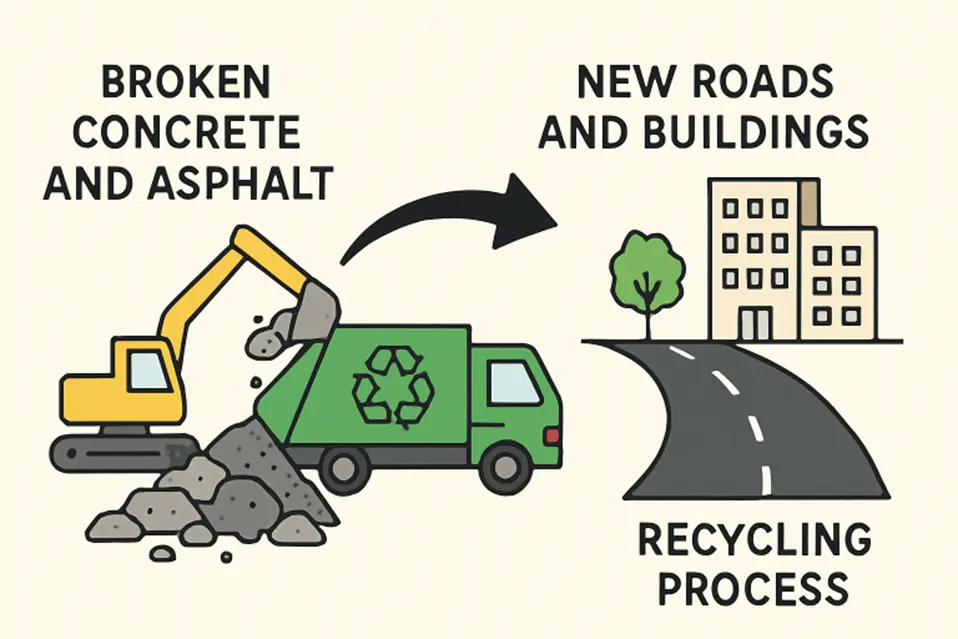

Sustainability in construction is more important than ever, and choosing smart solutions for materials disposal plays a pivotal role. As projects wrap up or begin anew, handling concrete and asphalt waste responsibly is not simply good practice—it’s essential for reducing our environmental footprint. The process of concrete disposal and recycling isn’t just about clearing debris—it’s a crucial step toward achieving resource sustainability and greener infrastructure.
Both concrete and asphalt are among the most widely used—and discarded—construction materials. Their proper disposal ensures not only efficiency and cost savings for businesses but also significant benefits for communities and ecosystems. Making proactive choices in waste management creates positive ripple effects on industry-wide sustainability and public health. By understanding and prioritizing effective disposal methods, the construction sector can significantly reduce landfill overflow and resource depletion, laying the groundwork for truly sustainable practices.
Environmental Impact of Construction Waste
Construction and demolition sites generate a massive amount of refuse, with concrete and asphalt being the primary contributors. In 2014 alone, the United States generated an astonishing 353.6 million tons of concrete waste and 76.6 million tons of asphalt concrete waste, according to data from the Environmental Protection Agency (EPA). Improperly managed, these materials can leach chemicals into soil and groundwater, pollute air spaces through dust and particulates, and place further strain on already overburdened landfills.
The environmental downsides don’t end at the landfill. The production of new concrete and asphalt requires the significant extraction of raw materials, energy, and water—all of which contribute to greenhouse gas emissions and threaten local ecosystems. With urban development showing no signs of slowing down, addressing the issue of waste is crucial for long-term environmental stewardship.
Benefits of Recycling Concrete and Asphalt
Adopting recycling practices for construction debris brings numerous advantages:
- Resource Conservation: Reusing concrete and asphalt means less need for mining new aggregates or producing virgin materials, preserving natural resources, and minimizing destructive mining practices.
- Energy Savings: Manufacturing new construction materials is resource-intensive; recycling processes, by contrast, are less demanding and significantly reduce overall energy consumption.
- Reduced Landfill Usage: By diverting these bulky materials from the waste stream, local landfills last longer, pollution decreases, and communities experience fewer negative impacts from landfill expansion.
- Enhanced Material Properties: Many recycled aggregates exhibit strengths comparable to (or even exceeding) traditional materials, making them attractive for new roads, foundations, and infrastructure projects.
Innovative Technologies in Waste Recycling
Technological advances have rapidly expanded the possibilities for recycling. For example, research teams are developing cement-free solidifiers that utilize industrial byproducts—such as incorporating recycled glass powder into earth silica compounds—that meet, and even exceed, traditional strength standards while generating fewer carbon emissions. Mobile recycling units and smart sorting systems now enable contractors to process materials directly on-site, reducing transportation emissions and facilitating more robust material separation.
Creative breakthroughs are also occurring in carbon capture within concrete production, further amplifying sustainability gains while producing valuable, high-quality recycled content.
Case Studies of Successful Recycling Initiatives
- California’s Recycling Efforts: As a leader in green infrastructure, California recycled over 3 million tons of concrete and 12.5 million tons of asphalt in 2010, setting a precedent for state-level commitment to sustainable construction. These programs not only diverted waste but also drove job creation within recycling sectors.
- Colorado’s Sustainable Asphalt Practices: The Colorado Asphalt Pavement Association implements benchmark reporting programs to track the environmental impact of construction materials. By closely monitoring recycling rates and promoting greener mixes, the state continues to lower emissions and reduce demand for raw aggregate materials.
Challenges and Solutions in Material Recycling
Recycling construction waste presents its own challenges. Ensuring that recycled aggregates meet stringent quality and safety standards requires thorough testing, certification, and, in some cases, reprocessing. Initial costs for setting up recycling infrastructure—such as specialized crushers and sorting units—can be a barrier for some contractors. However, the investment pays off through landfill savings, tax credits, and favorable government policies designed to incentivize sustainable practices.
Another hurdle is regulatory complexity; making sense of local, state, and national requirements can stall recycling efforts. Collaboration between building sectors, municipal agencies, and environmental organizations is crucial to streamline guidelines and create clear, achievable targets. Proactive education campaigns and public-private partnerships are beginning to address these obstacles across North America, gradually changing industry norms toward a more circular economy.
Future Trends in Sustainable Construction
The future of sustainable construction will be shaped by several key trends:
- Increased Use of Alternative Materials: Experimentation with recycled steel slag, palm kernel shell ash, and other byproducts is expanding, enabling the development of stronger, more resilient infrastructure while reducing waste.
- Advancements in Recycling Technologies: From AI-driven material sorters to modular, on-site recycling plants, technical progress continues to open new opportunities and efficiencies in waste management.
- Policy Support: Ongoing legislative efforts, including the proposed Concrete and Asphalt Innovation Act, are paving the way for lower carbon footprints and mandating benchmarks for recycled materials in public projects.
Industries that embrace these innovations and priorities will be best positioned to benefit economically, environmentally, and reputationally as the world demands greener solutions from the construction sector.
Conclusion
Concrete and asphalt disposal processes are crucial levers in making construction more sustainable. Through proper handling, recycling, and adoption of innovative technologies, professionals across the industry can dramatically reduce their ecological impact. As environmental awareness and support for green initiatives grow, these actions not only benefit the planet but also enhance business resilience, drive the development of new technologies, and contribute to a healthier built environment for future generations.
Also Read-How Mental Health Therapy Supports Both Mind and Body Wellness